Stories from Rural America and Ideas to Help it Thrive
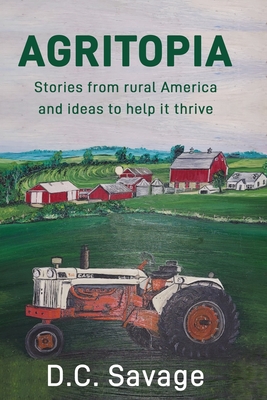
Description
Combine a healthy dose of skepticism about “well-intentioned big government agencies,” mix it with a teaspoon of sage taken from rural life experiences, then throw in a pinch or two of salt from real-world farm economics; now you have the recipe this book is cooking up.
Farm stories can be fun again: The Last Conestoga, Finishing Wild Cattle, Moron Mice, Farmer Pitching an Idea in Washington D.C. With the employ of lighthearted stories and musings, the author tries to shed light on serious ways we could improve the free market experience in rural America. The author attempts to preserve the middle-class farm and, in so doing, hold onto some of the good values archived in the heartland.
If you don’t want to stand on the sidelines and watch as “the system” asks the last independent American farmers and ranchers to “go now — and close the big doors on your way out of the barn,” please read on and consider encouraging long overdue change.
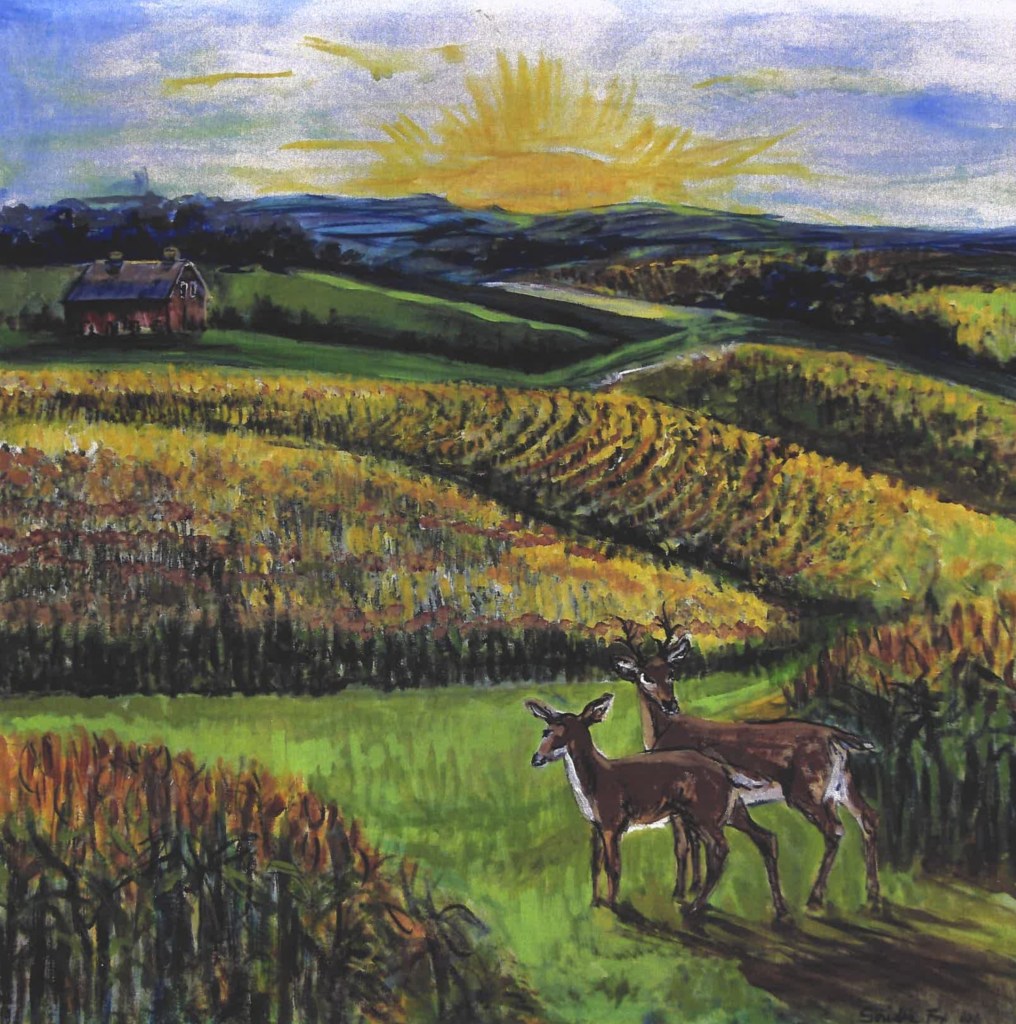
Credits to Sondra Fox 2010
Preface from the Book
My occupation in rural America is farming. My motive for writing this book is to lessen our industries’ overdependence on federal government intervention. A teacher once told me that to write successfully, one must first identify the audience. I decided my audience would be people.
So many of my trusted advisors: Farm Dog, Barn Cat and Bottle Calf, wanted me to take a deep dive into politics and maybe even throw out an endorsement or two…. but I refrained, arguing, “But who would care?” They agreed.
Could I write a story of my personal dealings within an overachieving federal agriculture system without some satirical observations on policy and politics and shoes? “Probably not,” says Farm Dog.
If you read me fairly, you will see that I am an equal-opportunity offender who tries not to be offensive. I’m attempting to keep a lighthearted disposition toward much of what I work to expose, such as campaign finance contributions, air surveillance of our farms, and what mice know and men don’t.
Farm Dog tells me, “But do not leave out the suits; you will need them to help fix what’s broke.” I argue, “flannels have to first identify what’s broke and how to fix it. Then we need strength in numbers to get the suits to buy in.” Farm Dog agrees. Barn Cat slinks away.
Some chapters are just fun farm stories that I have always enjoyed telling. Others are about policy and economics, like fixing Social Security, nutrient management, and the importance of independently owned livestock to our rural communities. If you are a psychology, political science, or rural sociology triple major, buckle up!
Please be forewarned that the chronology of our moves back and forth across the Midwest are not in order because this is not an autobiography. The Last Conestoga chapter is one of my favorites.
If you get through this read without understanding my proposed fix for agriculture, a fix that reflects a freer market system, namely the HYBRID FARM SAVINGS ACCOUNT (HFSA), then I have failed, unless, of course, you were somehow entertained!
Please enjoy, I did.
Hybrid Farm Savings Account (HFSA)
Proposal:
Congress should modify current tax code to give farmers a tax preferred account that looks much like the Health Savings Account. This HFSA would allow a farmer to put $20,000 (before tax) or up to ½ of allowable 179 tax deduction into a designated HFSA account in a local bank. The account can be accessed anytime, but only tax free when the county is declared a disaster area, otherwise rules of a traditional IRA apply as we age and use residual for retirement.
It would be advised for crop farmers to couple this HFSA with catastrophic crop insurance. This HFSA account would allow all multi-peril crop insurance to become unsubsidized, and allows risk to be transferred back to the farm and off of the tax-payer. Livestock/hay/vegetable/etc. farmers who have been left out of big programs would now have a way to buffer tough times. Long term, this model may be able to replace other USDA programs and ultimately save taxpayers money and reduce the federal deficit. What makes this version of a savings account so much more powerful than previous versions is the access to ½ of allowable 179. Banks should be required to pay prime minus 2 for these accounts. Just like the HSA, approved soil “wellness” activities should be able to come from these accounts tax free.
Example:
Farmer Joe has a good financial year in 2016 and has $100,000 he could take a 179 deduction on. Instead of using all of this on farm machinery again, he funds his HFSA account at the local bank for $50,000 and spends $50,000 on equipment.
In 2017 Joe has a break-even year but his great uncle left him $30,000 so he was able to put $20,000 of this into his HFSA account tax free. He now has $70,000 plus a little interest in this account.
In 2018 Joe has a drought and has a $60,000 loss after his catastrophic crop insurance pays out. The county was declared a disaster area so he could pull out of his HFSA to cover the loss without paying tax.
In 2028 Joe retires with 250,000 in his HFSA, he now pays tax on his withdrawals as if it was a traditional IRA.
Note to Policy Makers:
Think of the huge transition of farms and farmland coming. This account would help a young person working that off farm job transition from a hobby farm to full-time, we all know his/her biggest obstacle is capital. Help us help ourselves.
 Agritopia - Home Page